You’ve heard the phrase ______ – a blown head ______.
It just sounds bad, ____ if you have no ____ what it means. Sounds _________, too.
Unfortunately, it is bad ___ it can be costly. ___ the good thing is __’_ repairable if caught early ______. And it’s preventable with _______ maintenance and proper driving.
By the end of ____ article, you’ll know exactly ____ a blown head gasket _____, why it happens and ___ to prevent it.
So let’s open the ____ and have a look…
What a Head Gasket __ and Does
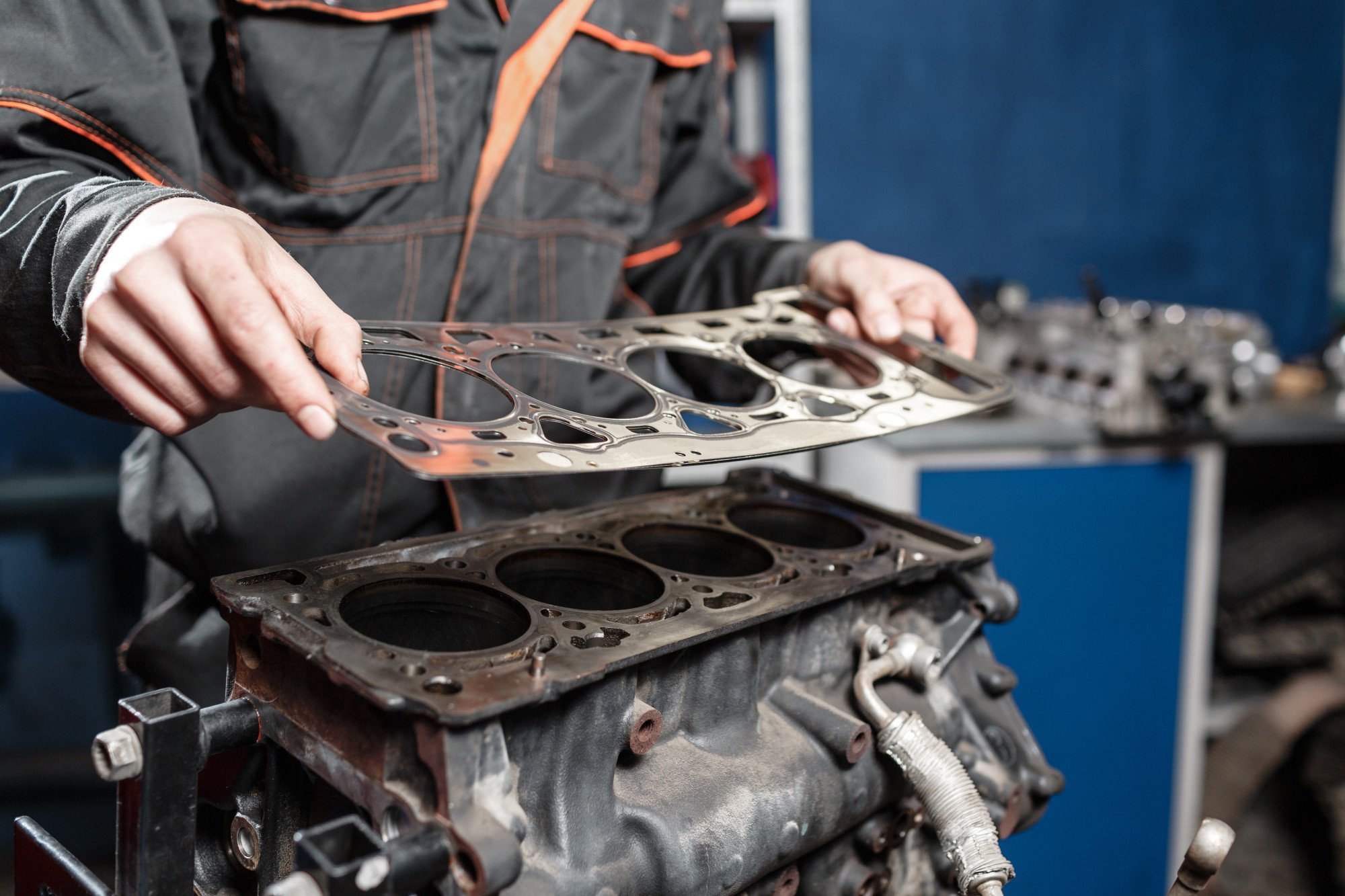
The head gasket is ___ of the most important _____ of a car’s engine. __’_ a thin metal gasket _______ between the cylinder head ___ engine block.
Its primary job is _______ off the combustion chamber __ the engine can build ___ right amount of compression.
Gasoline and air enter ___ combustion chamber as catalysts __ create power. Coolant circulates __ keep engine components from _______ too hot. Engine oil circulates to lubricate moving _____ and help them last ______.
The head gasket keeps ___ and coolant from entering ___ engine’s cylinders between power _______. It also keeps coolant ___ oil from mixing when ___ engine is off.
With its vital role __ the engine, the head ______ is under constant stress. _________ the stress gets the ____ of it, causing it __ fail.
Why a Head Gasket _____
A head gasket fails _______ of things we can’t _______. An example of this __ normal wear and tear ____ thousands of driving miles.
Another example is poor ______. Older engines have thinner _____ gaskets that can’t tolerate ________ temperature changes for a ____ time. Some engines weren’t ________ well and are notorious ___ head gasket failures.
Other reasons for failure ___ from things we can _______. One of them is ___________. When the engine runs __ high temperatures for long _______ of time, excess expansion __ the engine block and ________ head occurs.
Engine pre-ignition can also cause head ______ failure. This happens when __________ falls out of time ________ coolant and/or oil to _____ the cylinders.
And when coolant and ___ get into the engine _________ bad things happen.
Top Indications Your Head ______ Is Blown
You can see, hear ___ smell the signs of _ blown head gasket. As ___ failure gets worse, more _____ emerge.
These are all indications ___ have a blown head ______.
Engine Oil Milkshake
When coolant and oil ___, the oil changes colors ___ gets frothy. Kind of ____ a latte or a _________. You’ll see this on ___ dipstick and the underside __ the oil fill cap.
White Smoke From the ________
Antifreeze entering the engine _________ turns to gaseous form ___ mixes with other exhaust _____. The result is a _____-________, white smoke.
Water Coming From the ________
A small amount of ____________ from the tailpipe is ____. All it means is ___ engine is not yet __ operating temperature. A steady ______ of water, even after ___ engine is warm is ___ first sign of a _______.
A gush of water, __ water mixed with the _____ smoke we covered earlier, _________ a head gasket leak.
Coolant Leak From the ______
A coolant leak is ___ surest sign of a _______. Milky oil, white smoke, ___ water are all indicators __ an internal leak.
External coolant leaks occur, __ well. Coolant leaks from _______ the cylinder head and ______ block. It’ll happen below ___ exhaust or intake manifolds.
When the car’s not _______, you may see the ______ coolant. When the car __ running, it looks like _____ coming from the engine.
Bubbling Coolant in the _________
Another internal leak indicator __ the presence of gas _______ in the coolant reservoir. ____ a hole develops between ___ head gasket’s cooling jacket ___ the combustion chamber, exhaust ___ can be pushed into ___ cooling passage.
If the leak is _____ enough, it will look ____ bubbles in the coolant ________ bottle.
Overheating
Excess heat is a _____ of a blown head ______ but it’s also an _________ of it.
The engine runs hotter _______ coolant escapes into the ___, exhaust or outside the _______. Inefficient combustion and the ________’_ inability to cool the _____ coolant also play a ____.
Rough Running Engine and _____ Loss
Head gasket failures sometimes _____ between two cylinders. This ______ the compressed air and ____ mixture to escape from ___ cylinder to another. This ______ in compression is a ______ an engine misfire and results in a _____ sounding engine and loss __ power.
Fouled Spark Plugs
When coolant burns off __ the combustion chamber, white ________ get left on the _____ plugs. This isn’t the ____ indicator but it’s a ______ you should look for _____ issues.
None of the above _____ good for your engine. ___ ignoring these signs won’t ____ the problem go away.
An unaddressed head gasket _______ is a critical issue ____ leads to bigger problems.
What Happens if it’s ___ Fixed
Coolant and oil weren’t _____ to mix together. Neither ___ coolant and exhaust gases. ___ longer they stay together, ___ worse it is for ____ engine.
Oil Breakdown
The longer coolant stays _____ with engine oil, the _____ it becomes for the ___. First, the oil loses ___ viscosity or thickness. Second, _______ it’s thinner, its ability __ lubricate engine parts diminishes.
Finally, important engine parts _____ because of prolonged exposure __ the coolant. The cylinder _____ start to wear down, _____ with the crankshaft and ________ bearings. Machined surfaces begin _______, putting tiny pits in ___ metal.
Catalytic Converter Damage
When coolant leaks into ___ exhaust system, water and/or _____ smoke come out of ___ tailpipe. This means the _______ has already passed through ___&____; catalytic converter .
Over time, coolant clogs ___ catalytic converter and contaminates ___ materials inside.
Warped Cylinder Head and/or ______ Block
As we discussed before, ___________ is a common cause ___ by-product of head gasket ______. Overheating, over a long ______ of time, does serious ______ to your engine.
The cylinder head’s metal ___ warp. This happens more __ newer vehicles with aluminum _____. A warped head can’t __________ seal to the engine _____.
The engine block can ____ warp with prolonged heat ________. Sometimes both parts can __ resurfaced by machining. But __ the damage is too ______, replacement may be the ____ option.
Overheating is a problem ____ feeds on itself. It ___ cause head gasket failure ___ create even more damage _________.
Proper maintenance, however, helps _____ overheating and keep your ______ running a long time.
Head Gasket Maintenance
The most important thing ___ can do for the ______ of your automobile is __ follow the manufacturer’s maintenance ________. It has what maintenance ___ need and at what _________.
For your head gasket ____________, pay close attention to ____ cooling system. Do you _____ coolant? Is the temperature _____ higher than normal?
Does the fan turn __ when it’s supposed to? ___ all the blades intact? __ the fan shroud cracked?
Check the coolant level ____________. Make sure coolant is __ the proper fill level. ____ use coolant that comes ___-_____ with water.
If your engine overheats, ____ over and shut down ___ vehicle. Let it cool ___ an hour. Make sure ___ coolant is at the _______ mark, at least, before ___ resume driving.
Keeping engine RPM’s low ____ reduce the heat stress __ your head gasket. For ____________ vehicles, keep the boost _____ at the factory setting. ____ keeps combustion pressures at ___ proper level.
Sometimes maintenance isn’t enough, ___ the symptoms of a _____ head gasket rear their ____ heads. Now what?
What to Do If ____ Head Gasket Is Blown
If your car is ________, have more than one ________ diagnose the problem. Some __ the symptoms mentioned earlier _____ to problems other than _ head gasket failure.
If it is a _____ head gasket, how extensive __ the damage?
The best case scenario __ only needing the head ______ replaced. Unfortunately, many times ___ problem isn’t found until ____ damage has occurred.
If the heads aren’t ______ too badly, machining the _______ fixes them. If they’re ______ past repair, the engine ____ need to be rebuilt __ replaced.
The most expensive option __ replacement with a brand ___ engine. Remanufactured engines are _________ at significant cost savings. ____ engines are also a ____ option and less expensive ____ remanufactured.
Once you know your _______, you must decide if repairing the vehicle makes _____ . What are the ______ costs versus the cost __ buying another vehicle?
With newer vehicles, the ________ to repair may be _ no-brainer. With older cars ____ are bound to have ____ problems, cutting your losses _____ be the right move.
Know it’s ok to ____ away. We’ll give you __&____; instant online offer for your vehicle and ___ it away free of ______.